Field notes: the QS team that stopped assembling tenders the night before
A QS team pricing municipal work built every submission from scattered folders on the eve of closing. A tender register with closing dates and a work-item checklist ended the Friday panic.
The fluxems team · Field notes
One more composite story, anonymised and stitched together from patterns we keep seeing. A QS team pricing municipal work had a ritual they hated: the night before a tender closed, someone stayed late to assemble the submission. Pricing schedules from one folder, compliance documents from another, the returnable schedules from an email thread, the site meeting minutes from someone's desktop. Every bid went out, but every bid went out at the last possible hour, and everyone knew that one day the ritual would fail.
The situation
The team was tracking maybe a dozen live tenders at any time, spread across a spreadsheet, a wall calendar, and a shared drive that grew a new folder structure with every bid. Closing dates lived in the spreadsheet, but the spreadsheet was only as current as the last person who remembered to update it. Twice in the previous year a closing date had moved and the team found out from the briefing minutes days later. One submission missed the deadline outright. Nobody was sure how much work-in-progress had died in folders over the years.
What kept going wrong
- Closing dates lived in a spreadsheet that drifted out of date, so urgency arrived all at once instead of early.
- Each tender's documents were scattered across folders, inboxes, and desktops, so assembly meant hunting.
- Returnable schedules had no checklist. Whether everything was in the pack depended on one person's memory.
- Nobody could see submission readiness at a glance, so the only honest status was "we will know on Friday".
- After a bid, there was no clean record of what was submitted, which made the next similar bid start from zero.
What changed
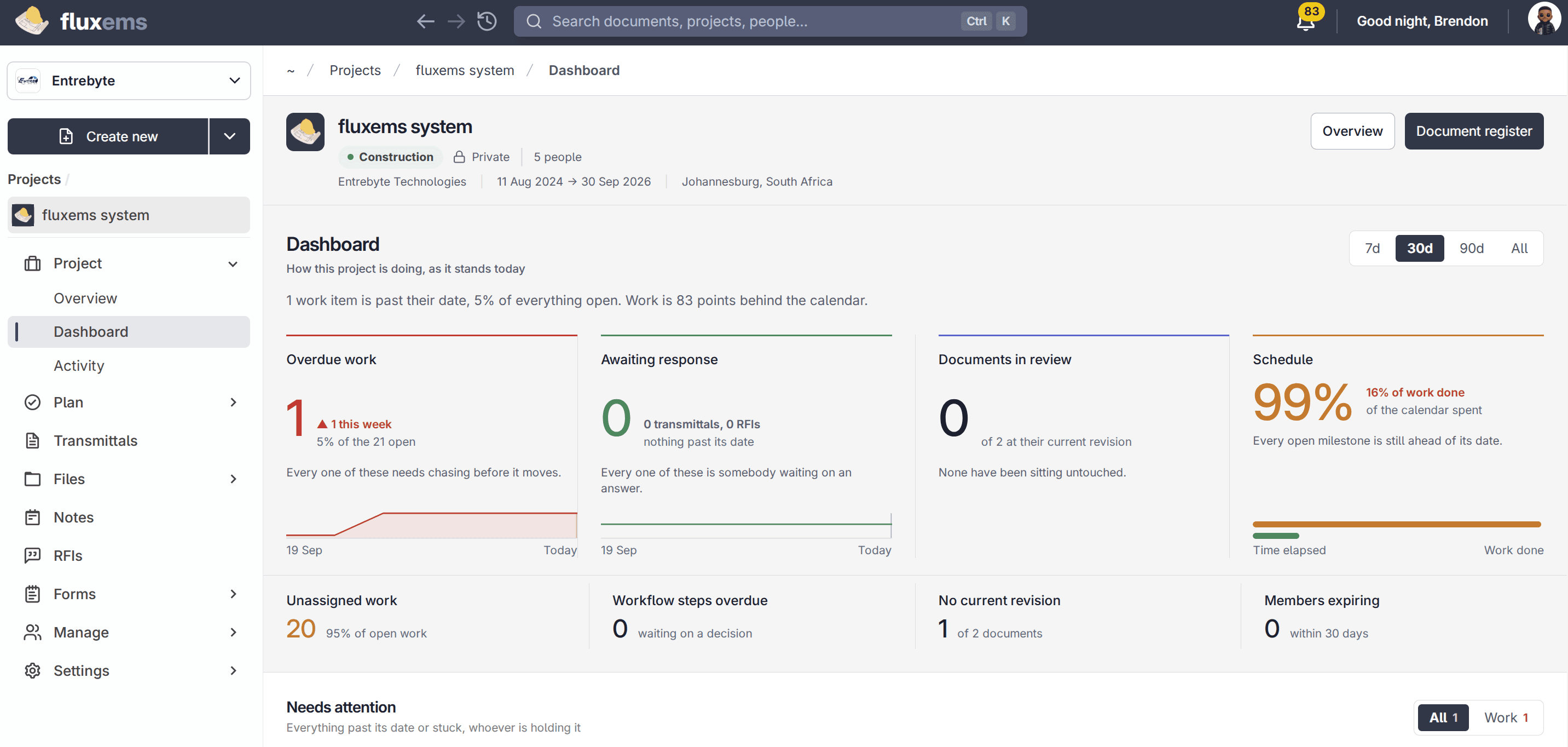
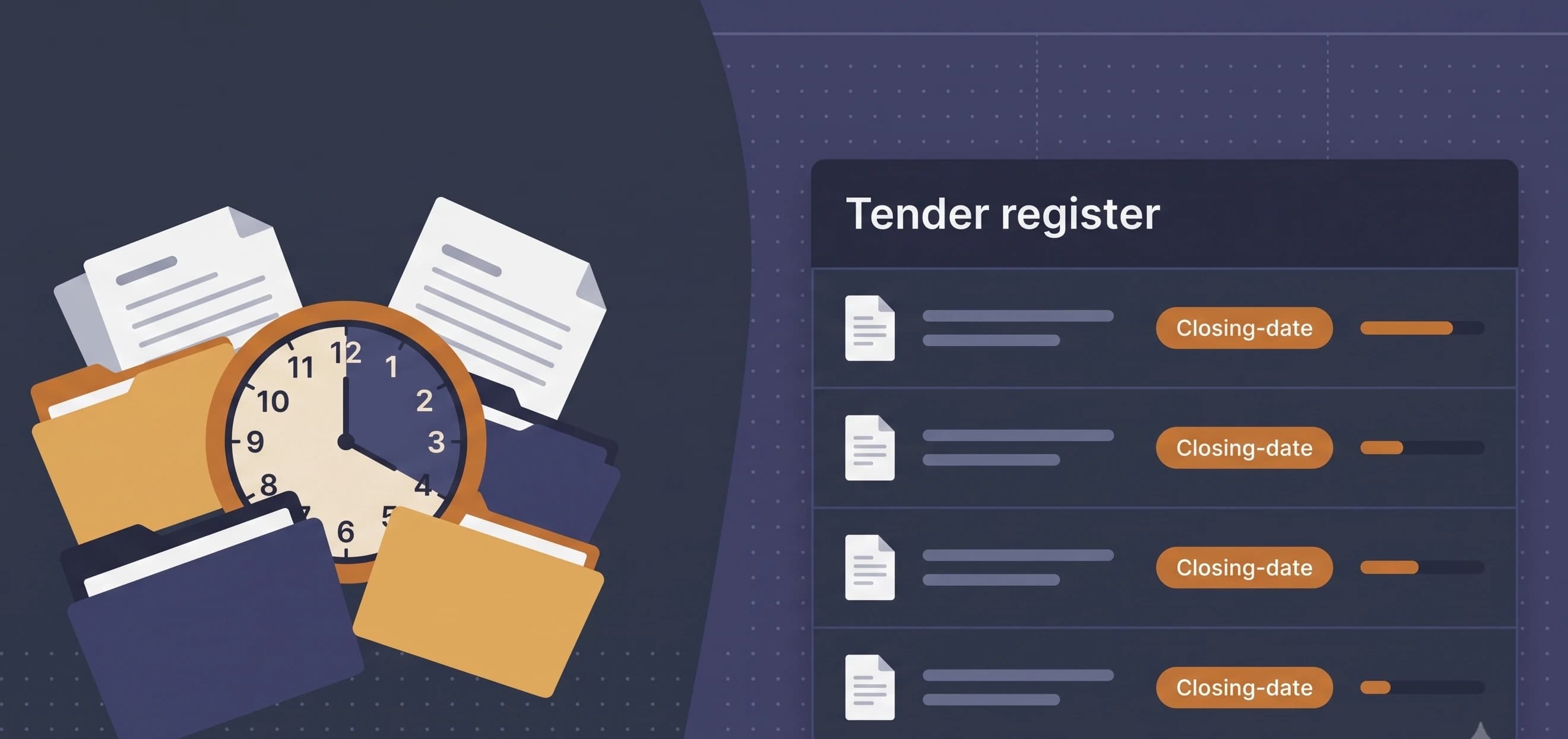
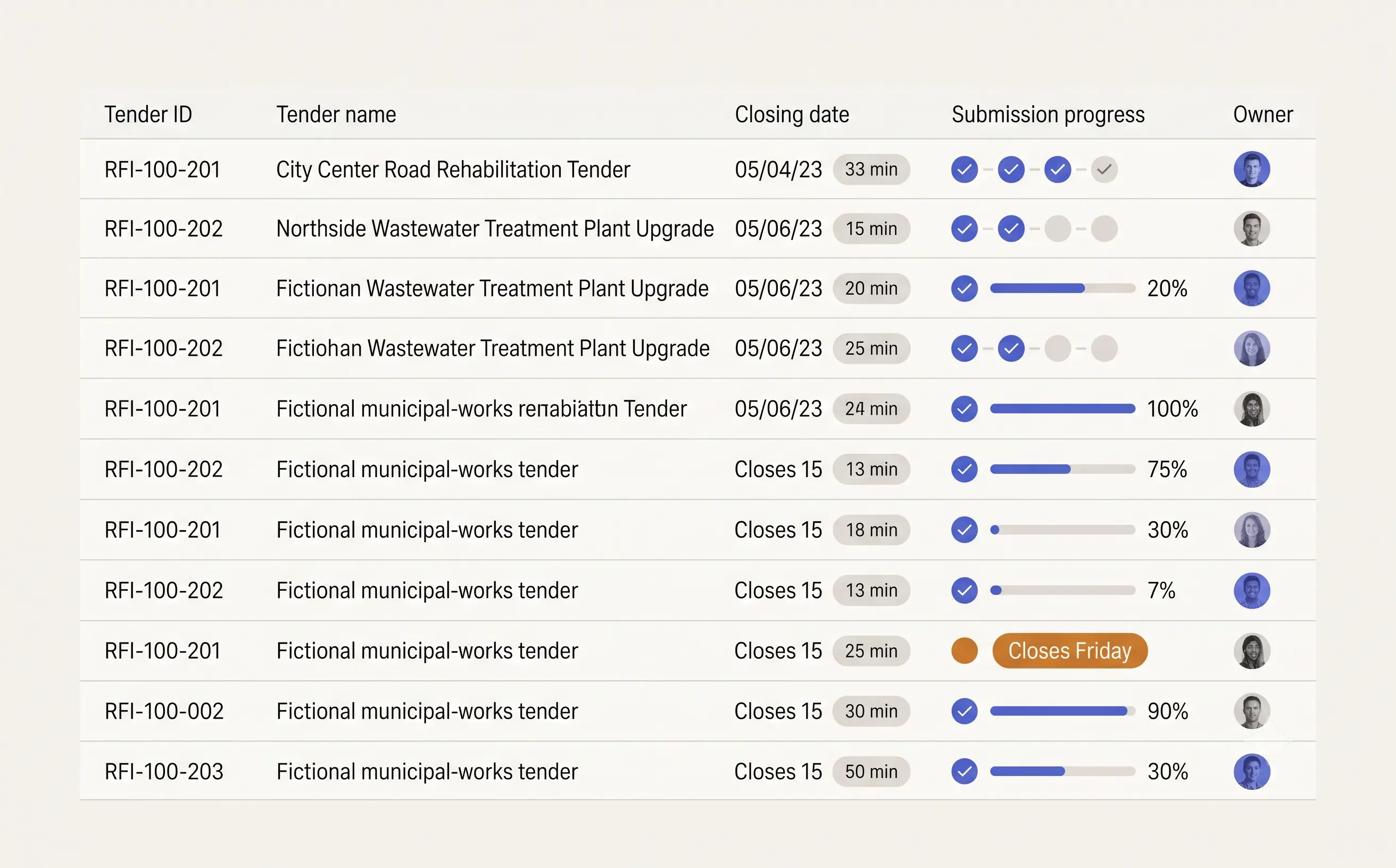
The team moved their pipeline into the tender register in fluxems, where finding and tracking tenders puts closing dates front and centre instead of buried in a spreadsheet column. Every live bid shows how long is left, so the week-out warning happens by default. Date changes get updated in one place, and the whole team sees the same countdown.
The bigger shift was keeping everything with the tender. Pricing schedules, compliance certificates, addenda, briefing minutes: all of it attached to the bid it belongs to, so assembly stopped being a hunt across folders. The returnable schedule became a set of work items against the tender, one per required document, each with an owner and a due date ahead of closing. Submission readiness went from a feeling to a count: eight of eleven items done, three owners visible, days in hand.
What it looks like now
The Friday panic is gone. Submissions now come together over the life of the bid instead of the night before, and the team says they are submitting more tenders on time than before, simply because effort stopped leaking into last-minute assembly. Each closed bid leaves a clean record: what was submitted, when, and by whom. When a similar municipal tender comes around, the last bid is a reference pack instead of a memory, and pricing starts from something real.
Work the checklist backwards
Set the due date for every returnable item at least two working days before closing, not on it. The gap is your margin for the certificate that expires or the signature that is on leave.
If your submissions come together the night before, the process is running on luck. See how tendering works in fluxems, or talk to us about your next bid.