Field notes: the consultancy that got site queries out of WhatsApp
A structural consultancy was answering site queries over WhatsApp and phone calls, then losing the answers. Turning every query into an RFI with a clear ball in court roughly halved their turnaround.
The fluxems team · Field notes
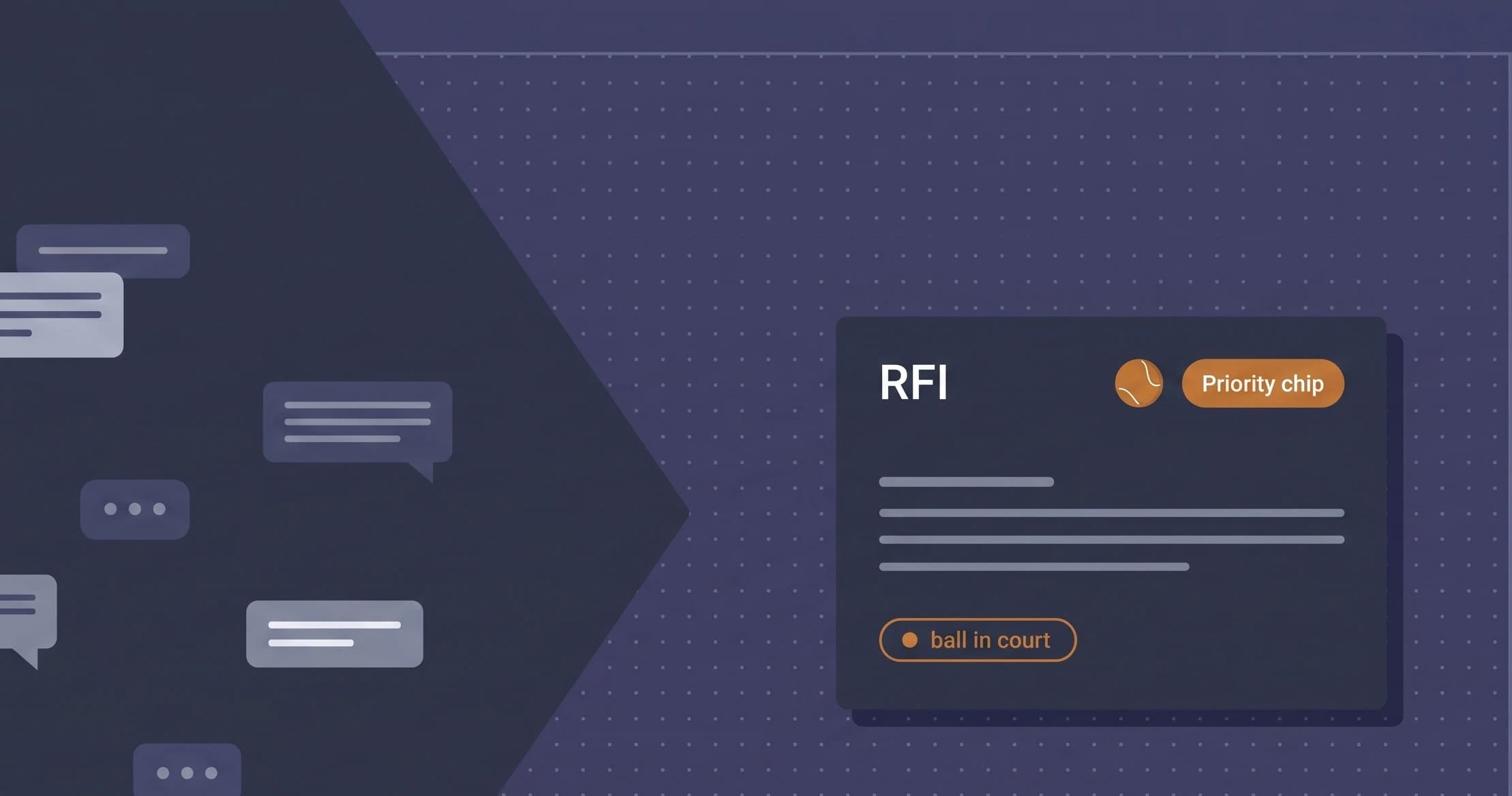
Another composite story from the field, anonymised as always. A structural consultancy working across several sites was drowning in queries. Contractors phoned the engineer directly, messaged the WhatsApp group, or grabbed whoever visited site that week. Every question got an answer eventually. The problem was what happened to the answer afterwards: nothing. It lived in one person's chat history, and the same question came back a month later from someone else.
The situation
At the point we picked up the story, the team estimated they had roughly 40 open queries across their projects, though nobody could say the exact number, and that was exactly the problem. There was no list. Queries lived in three WhatsApp groups, two inboxes, and a few notebooks. When a contractor claimed a delay because "the engineer never answered", the consultancy had no clean way to show they had answered in two days, because the answer was a voice note.
What kept going wrong
- Queries arrived through five channels, so no one person ever saw the whole queue.
- Answers were given verbally or in chat, then lost. The same question got answered twice, sometimes differently.
- Nobody knew who was holding a query at any moment: the contractor, the engineer, or the architect they were waiting on.
- There were no response dates, so nothing was ever officially late, and nothing was ever chased until it hurt.
- When accountability arguments started, there was no record either side could point to.
What changed
The consultancy made one rule with their contractors: if you want an answer you can rely on, raise it as an RFI. A phone call is fine for a heads-up, but the question itself goes into fluxems with a subject, the drawing it concerns, a priority, and a response date. From that moment the query has a ball in court, and everyone can see exactly whose desk it sits on. When the engineer needs the architect's input before responding, the ball moves, and the record shows the wait belongs to someone else.
On the consultancy's side, the engineers stopped fishing across channels. Incoming RFIs and project correspondence land in the Mail inbox, one queue instead of five, worked through the same way every morning. Project mail keeps the correspondence attached to the project rather than a personal inbox, and answering an RFI closes the loop formally: the answer is written against the question, dated, and visible to everyone involved.
What it looks like now
Within about three months, their RFI turnaround had roughly halved. Not because anyone worked faster, but because queries stopped waiting in the wrong place. The response date makes lateness visible before it becomes a claim, and the open list means nothing falls through between site visits. The change the engineers mention most, though, is the argument that disappeared: "who is holding this up" used to be a weekly fight, and now it is a field on a screen. The ball in court is either yours or it is not.
The phone call does not have to die
Teams worry this kills the quick call. It does not. Call, talk it through, then capture the outcome as the RFI answer. The conversation stays fast; the record stays permanent.
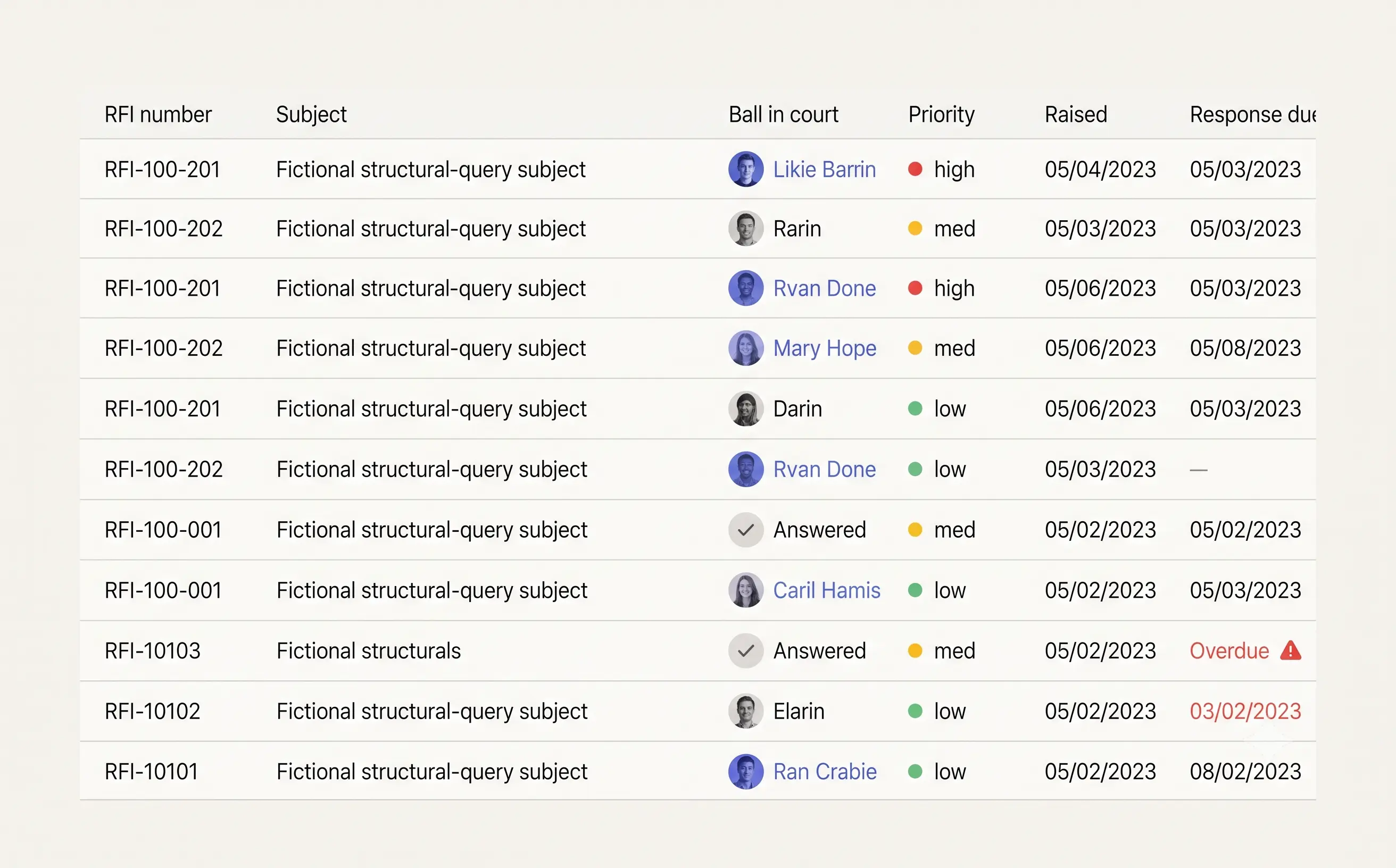
If your answers live in chat histories, the record is working against you. See how RFIs and markup work in fluxems, or book a walkthrough with your own open queries.